

metallic
Pour a metallic you have already practiced.
Clear base and metallic pigment, plus a topcoat that bonds to both, shipped to Stockton crews from our Tracy bench or staged for pickup. Every line on the shelf was run on a real pour before it earned the space. If you have never moved a metallic before, the academy is where you make your first mistakes, on a board, with nobody paying for them.
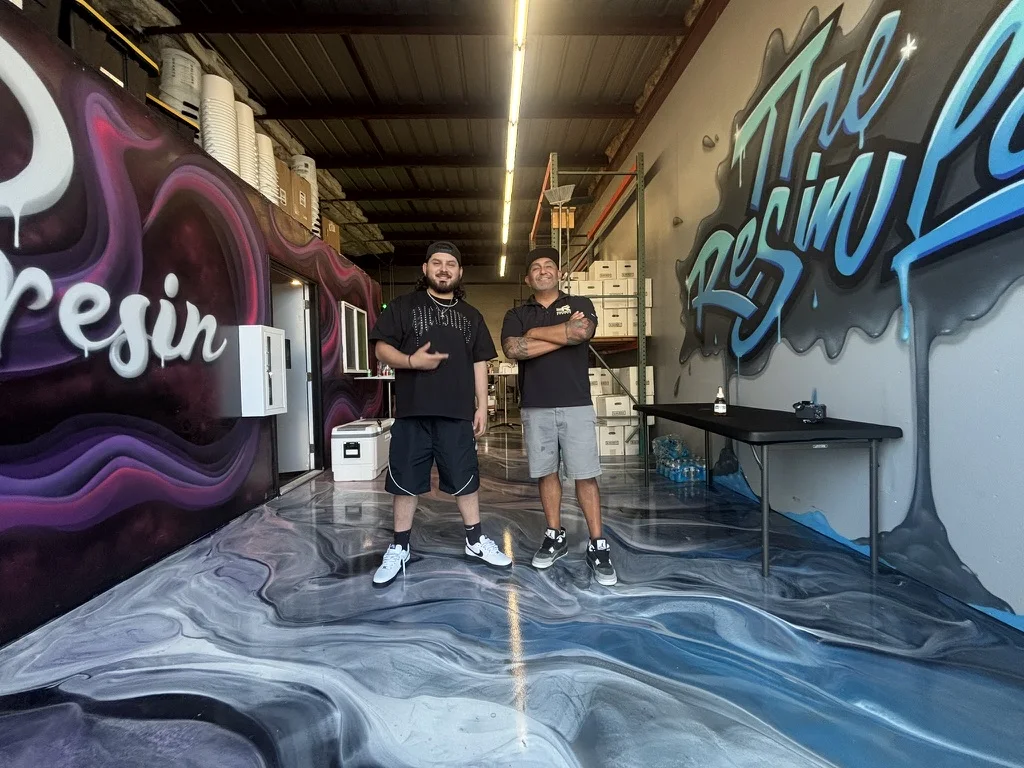
Pigment lives in the clear, so start with the clear.
A metallic floor is a clear epoxy carrying a small load of pigment, and almost everything people love or hate about the finished look comes down to how that pigment sits in the resin. Mix it in lazily and you get pockets of dry powder that cure as dull freckles under the topcoat. Dump the whole charge in at once and it clumps against the side of the bucket where the paddle never reaches.
The base matters just as much. Some clears stay open a long time and let the pigment drift and swirl, which is great for a veined, marbled look and hard on a crew that wants something calmer. Others stiffen sooner and hold whatever pattern you set. We carry more than one because the rooms Stockton installers get hired for are all different.
Mix the pigment into Part A first, with a real drill and paddle, until a smear on a stir stick shows no specks at all. Then add the hardener. Call the bench with the look you are chasing and we will match the base to it before anything ships.
Specks on the stir stick become freckles on the floor.
Every lap shows, so plan the movement before the pour.
Metallic is the one system where the tools you use to move the material stay visible in the cured floor. A roller seam, a trowel ridge, the spot where two people met in the middle of the room: all of it reads later. So the movement gets decided out in the driveway, before anyone cracks a kit.
Pick one technique and stay with it
Rolled, troweled, or worked with a blower, each one leaves its own signature. Switching methods halfway across a room is the most common reason a finished metallic looks like two different jobs stitched together.
Keep a wet edge the whole way
Metallics hate a dry edge. Work in lanes that overlap while the last one is still open, and size your batches to the crew you actually have that day. Two people who keep up will beat four who keep stopping to talk.
Finish the last pass in one direction
The final pass sets the grain. Walk it out in spiked shoes the same way across the whole floor, or the light will catch every place somebody changed their mind.
Then leave it alone
Once the pattern is set, stop touching it. Most of the ugly laps we hear about came from someone going back into a spot that was fine and trying to improve it.
Turn the real lights on before you judge a single pass.
A metallic can look perfect under a work lamp at knee height and fall apart the moment someone flips on the long overhead fixtures. Low, raking light is honest. It shows roller lines, trowel chatter, and the faint halo around a spot that got rolled twice.
Bring the light the room will actually live with, and look at the floor from the doorway, because that is where the client stands when they decide how they feel about it. In a showroom or a home bar with windows along one wall, that also means checking at the hour when the sun comes in low.
Marks you catch while the resin is still open can be walked out. Marks you find the next morning belong to the floor until another coat goes on. If a pass looks wrong and you cannot say why, call (209) 208-4656 and describe what the light is doing. Chris has poured these systems himself, and he can usually tell you what happened in a sentence.
Your first metallic belongs on a practice board.

Nobody learns movement from a video. Your hands have to feel how long the material stays workable, how far a roller drags pigment, and what happens when you go back into an area that has started to set. That lesson is cheap on a board and very expensive on somebody’s garage.
The training academy is built for exactly this. You pour boards, you ruin a few, you find out which technique suits the way you work, and you leave knowing what your own version of a good metallic looks like. After that you can hand a Stockton customer a sample you made yourself instead of a photo from a brochure.
The owner started Exclusive Resin Supply to take the guesswork out of this trade and to help installers avoid the costly mistakes he made learning it on real jobs. The academy is where most of that happens. Ask about the next session when you get in touch.
Some rooms should get flake instead.
We sell metallic pigment and we will still talk you out of it on certain jobs. A working garage with hot tires and dropped wrenches every week is going to show scratches in a glossy metallic long before a busy decorative flake floor would, because the chip pattern hides wear.
The same goes for a customer who expects the floor to match the sample exactly. Metallics move. No two come out identical, and a client who needs predictability is usually happier with flake or a solid epoxy system. Having that conversation before the deposit saves everybody a hard one after the cure.
Metallic earns its place in showrooms, offices, home bars, and living spaces where the floor is the point of the room. It still wants a tough finish on top, and plenty of crews ask about polyaspartic topcoats for that. It also needs a clean, open profile underneath, which is why a grinder rental often rides along on the same order. Line up the pigments you want to show a client in the catalog before you pitch a look.
Sell the floor the room can live with.
Pigment, clear and tooling on one order.
Stockton is one of the markets we supply across San Joaquin County, and it sits about 22 road miles from the Tracy bench. Most orders go out the same week. Pickup is easy too: call ahead and we will stage the clear, the pigment and the topcoat so the whole system is waiting when you pull up.
The full line lives on the metallic flooring systems page. For everything else we carry for this market, start at the Stockton supply page or look over the rest of San Joaquin County.
What installers ask before a first metallic.
How much metallic pigment goes into a kit?
Follow the ratio on the data sheet for the specific base you are using, because it changes from one resin to the next. Too little pigment looks washed out and too much can muddy the movement. Tell us the look and the square footage and we will work out the quantities with you.
Can I put a metallic over an old coated floor?
Usually the old coating has to come up, or be ground back to a sound and open profile, before a metallic goes down. It is a thin, clear system and it will telegraph every flaw underneath. Describe what is on the slab now and we will tell you what the prep involves.
Which topcoat should go over a metallic?
It depends on the room. A garage or a busy commercial space needs a harder-wearing topcoat than a bedroom or a quiet office. Call the bench with where the floor is going and how it gets used, and we will match a topcoat that bonds properly to the base you bought.
Do I need training before my first metallic job?
Nobody requires it, but practicing first will save you money. A few boards at the training academy teach you more about wet edges and movement than your first paid job will, because a mistake on a board costs nothing. Ask about the next session when you call the bench.
Can you get metallic material to Stockton this week?
Most orders go out the same week, and Stockton is about 22 road miles from our Tracy bench, so local delivery or pickup is easy to arrange. If you would rather pick up, call ahead and we will have the whole system staged and ready when you pull in.
Do you install metallic floors?
No. The shop sells the pigments, clears and tooling and teaches the technique; your crew does the pour. Chris has run metallic floors on his own jobs, so when a lap shows or a pigment clumps, the person on the phone has seen it happen and can tell you why.
Describe the room and the look you want.
Describe the room, the lighting and the look, and we will talk pigment loads and practice time before you order.
- (209) 208-4656
- chris@exclusiveresins.com
- Tracy, CA · Ships nationwide
Metallic job coming up in Stockton?
Call the bench with the square footage and the look, or send a message and we will spec the base, pigment and topcoat together.