

metallic
The color under a metallic decides the floor.
Base coats, metallic pigments and the topcoats that bond to them, sent to Lodi from the Tracy bench or held for you to pick up. Chris has poured these systems on his own jobs, so each line on the shelf proved itself on a real floor first. Bring us the room and the color you have in your head, and we will build the stack backward from there.

What sits underneath shows through the swirl.
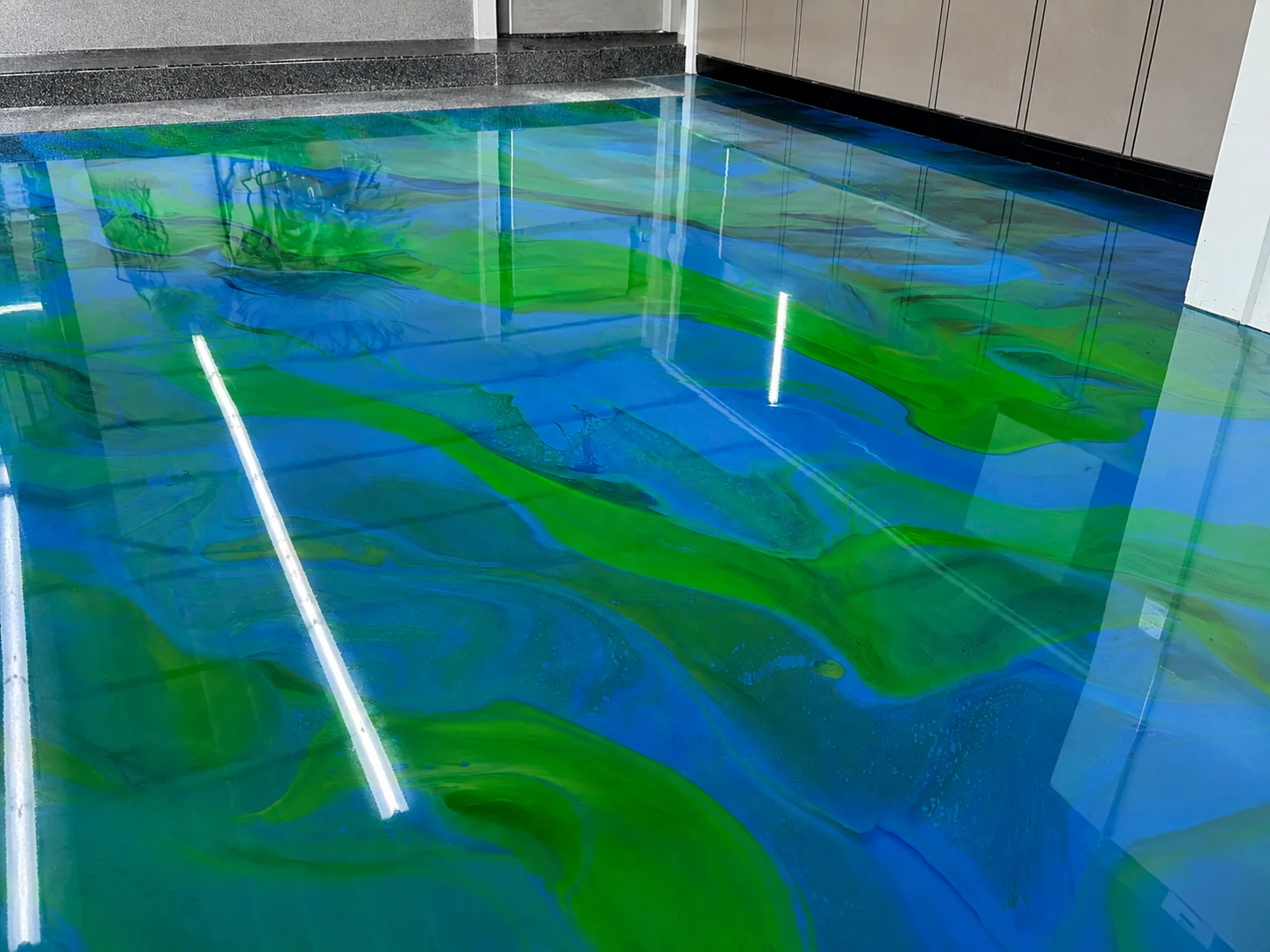
A metallic is never one solid sheet of color. As the pigment drifts and veins open up, the resin thins over parts of the floor, and in those thin spots you are looking straight down to the coat below. That base is doing half the design work whether anyone planned it or not.
A dark base pushes a silver or gray metallic deeper and makes the lighter veins jump. A white or pale base cools and brightens the same pigment. Pick a strong contrast, say copper over black, and the movement turns dramatic. So does every lap, every thin patch and every place the roller skipped.
For a first metallic, most installers are happier with a base tinted close to the main pigment, because the floor stays calm where the pattern opens up. Save the high-contrast pairings until your hands know the material. Put the base tint and the pigment on one ticket so they come off the same shelf, and describe the look you want when you call.
The base is the color you see wherever the pigment lets go.
Weigh the pigment, then move it on purpose.
Loading and movement are where two floors from the same kit start to look like different products. A few habits keep a long room consistent from the first bucket to the last one.
Put every charge on a scale
Scoops lie, especially with fine powder that settles in the jar. Weigh out the ratio the data sheet gives for that base, and the fourth kit of the day will match the first one lying beside it.
Scrape the bucket walls while you mix
Clumps cling to the sides and the bottom corner where a paddle skims past. Stop, scrape them down, and keep mixing until the resin sheets off the paddle smooth before any hardener goes in.
Choose the movement on a sample board
Rolling, troweling and pushing the material with air each leave their own grain. Settle on one before the job and carry only that method across the job.
Hand out jobs before a lid comes off
Decide who mixes and who spreads while everyone is still standing in the driveway. A crew sorting that out mid-pour is watching its working time run down.
High gloss is a mirror for every flaw in the slab.
Once a metallic cures, the surface reflects light like a pane of glass, and a reflection shows every bump and dip beneath it. Patch edges, pinholes, a crack repair that sits a hair proud of the concrete, even old trowel marks in the slab can print through a clear system and show up as wobbles in the shine.
That is why prep counts for more here than under a busy flake. Flake hides small sins. A metallic in a lit hallway puts them on display. Grind to a clean, open profile, fill cracks and pinholes, then grind the repairs flush so patch and slab read as one surface. A grinder rental from the bench covers that step if you do not own a machine.
Before the base goes down, walk the slab with a flashlight held flat to the floor. Anything the beam catches, the finished floor will catch too. Stuck on whether a spot needs more work? Call (209) 208-4656 and describe what you see.
A hallway and a living room ask different things of the same pigment.
Commercial runs, like a long hallway or a showroom where the floor is part of the display, bring rolling carts, dragged chairs and a lot of shoes. The pour is bigger, the batches need more hands, and the line where one day of work meets the next has to land somewhere sensible, such as a doorway. Those rooms usually want a harder wearing top layer, and plenty of crews look at polyaspartic coatings for that job.
A home interior is smaller and more personal. Furniture legs, pet claws and afternoon sun through a window matter more than foot traffic, and the owner often wants the color to sit right with cabinets or trim already in the room. Bring a cabinet door or a paint chip into the conversation and we can talk base and pigment against the real thing.
Learn the movement on a board in Tracy.
Movement is a feel, and feel only comes from pouring. At the training academy you work a test slab with the same materials you would carry onto a job, watch how long the resin stays open, and learn what happens when you go back into a section that has started to set.
Pouring a sample yourself tells you honestly whether the look a Lodi customer wants is one you can deliver right now.
Chris built the shop so installers could skip the costly mistakes he made learning this trade on real floors, and the academy is where most of that gets passed on. If a customer truly needs a predictable result, decorative flake systems or a solid epoxy system may serve them better, and we will say so. Ask about the next session when you reach the bench.

Lodi orders, from base coat to topcoat.
Lodi is about 33 road miles from the Tracy bench, one of the San Joaquin County markets we ship to regularly. Most orders go out the same week. If you would rather drive over, call ahead and we will have the full system sitting on the bench for you.
The whole line is on the metallic flooring systems page, and the floors we test on are written up at the field test bench. For the rest of the shelf in this market, start at the Lodi supply page, browse pigments in the catalog, or look across San Joaquin County.
Before you order a metallic kit.
What base color should go under a gray metallic?
A charcoal or black base deepens gray and lets the lighter veins stand out, while a white base keeps the floor bright and cool. For a first job, tint the base close to the main pigment so the thin spots stay quiet. Tell us the look and we will pair the two.
How do I keep kits matching across a long room?
Weigh the pigment for every kit against the ratio on the data sheet, mix each batch for the same length of time, and use one movement method from wall to wall. Order all the pigment for the job at once so you are never short halfway across the floor.
Why does my finished metallic show patches in the slab?
A glossy clear system reflects light, and reflections reveal any bump or dip underneath. Repairs that were never ground flush, pinholes left open and old trowel marks can all print through. Grinding repairs level and checking the slab with a low flashlight before the base goes down prevents most of it.
Does a metallic hold up in a busy commercial hallway?
It can, with the right top layer and a plan for traffic. A commercial run needs a tougher finish than a bedroom does, and the break between pour days should fall at a doorway. Call with the square footage and how the space gets used, and we will match a topcoat to it.
Can I pick up a metallic order in Tracy instead of shipping it to Lodi?
Yes. Lodi is about 33 road miles from the bench, and pickup is always open. Call ahead and we will stage the base, pigment and topcoat together so the whole system is ready when you arrive. On a large order, the drive often saves you the freight.
Will you pour the metallic floor for us?
No. We sell the base coats, pigments, topcoats and tooling, and we teach the technique at the academy; you or your crew do the pour. Chris has run these floors on his own jobs, so when something looks off, the person on the phone can usually explain why.
Tell us about the room and its light.
Say where the floor is going and what light it lives under, and we will talk base tint and pigment before anything ships.
- (209) 208-4656
- chris@exclusiveresins.com
- Tracy, CA · Ships nationwide
Got a Lodi room that wants a metallic?
Send a photo of the space and the colors you like. We will pair a base, a pigment and a topcoat that work together and get them headed your way.