

chips
Chips that hide a working garage.
Decorative flake for Lodi garages and shops that live with hot tires, dust and daily use. We help you settle full or partial broadcast, chip size and blend, count boxes against the square footage, and talk the color through with you so it is decided before the base goes down. Your crew does the throwing.
Throw to refusal, or let the base show through?
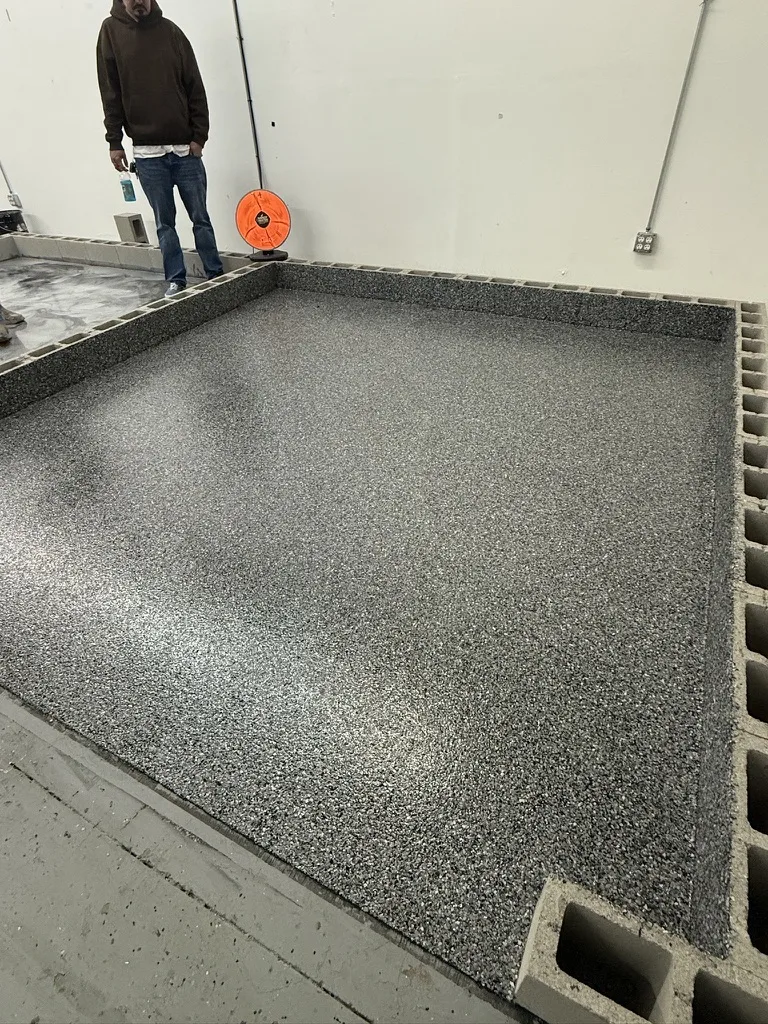
The person in this photo is broadcasting flake into a wet base, with the field spreading toward the camera. How far that throw goes decides the whole floor. Keep going until the base will not accept another chip and you have a full broadcast, where the base color vanishes and the flake carries the look. Stop earlier with a lighter scatter and the base becomes part of the design.
Full broadcast gives the most coverage over a tired slab, and it is what most garage customers picture when they ask for a flake floor. It takes a lot more material and a real scrape afterward. Partial broadcast saves boxes and time, although the consistency of the person throwing is on display across every square foot of the room.
blend
Blends that forgive dust and tire marks.
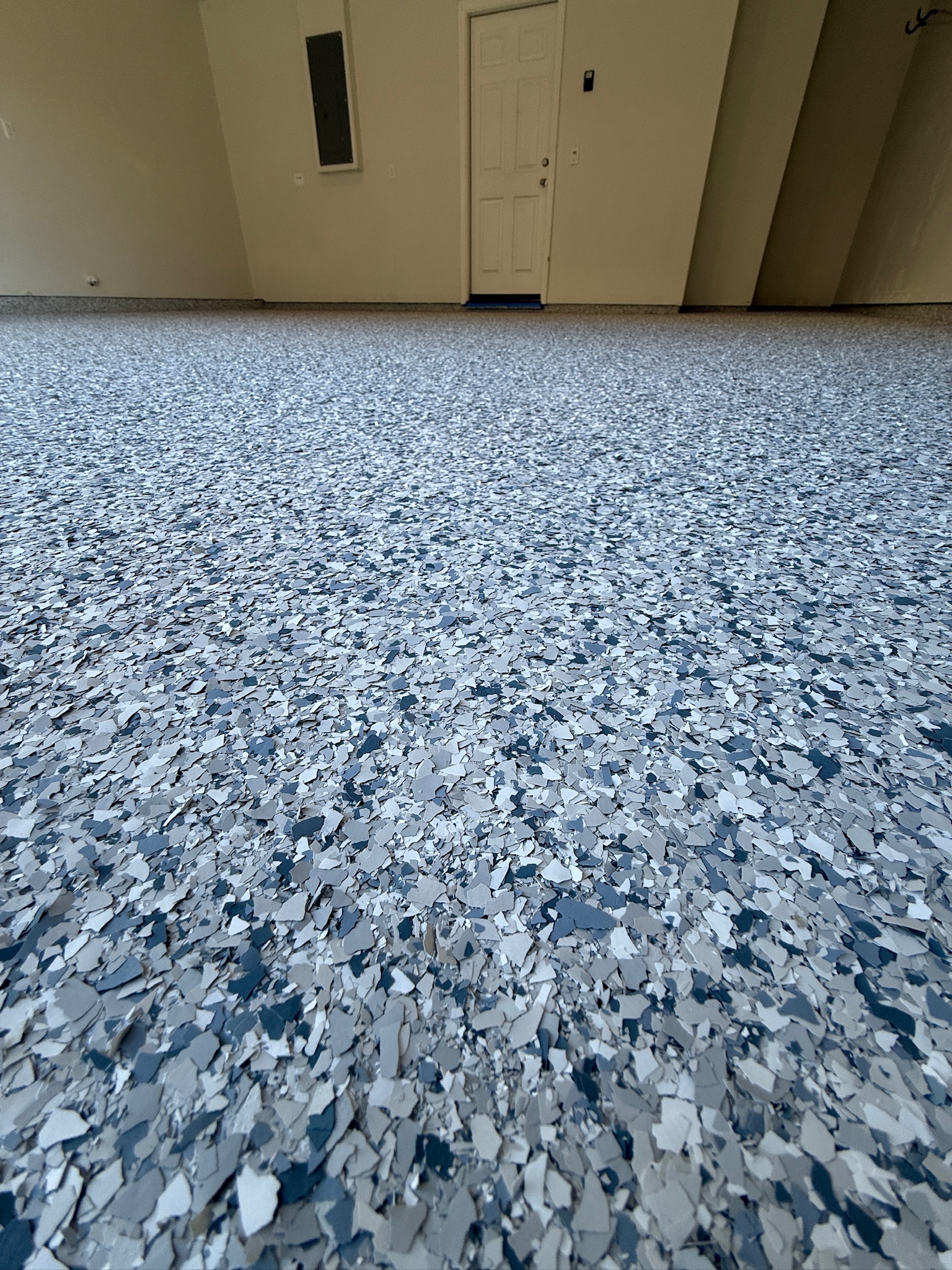
A garage floor gets judged on a weeknight with a car parked on it, which looks nothing like a showroom sample. Black tire scuffs, tracked-in dust and the odd drip of oil all land there. A mid-tone blend that mixes light and dark chips swallows most of that. A very dark blend shows every gray film of dust, and a very light one shows every scuff.
Chip size shifts the effect. Smaller chips blur into a speckle that reads as a single color from the doorway and spreads dirt out evenly. Larger chips show each piece and add character, with more texture left to knock down. For a working garage in Lodi, most people end up happiest with a busy mid-tone blend in a medium chip.
Hot tires, jack stands and a car on a lift.
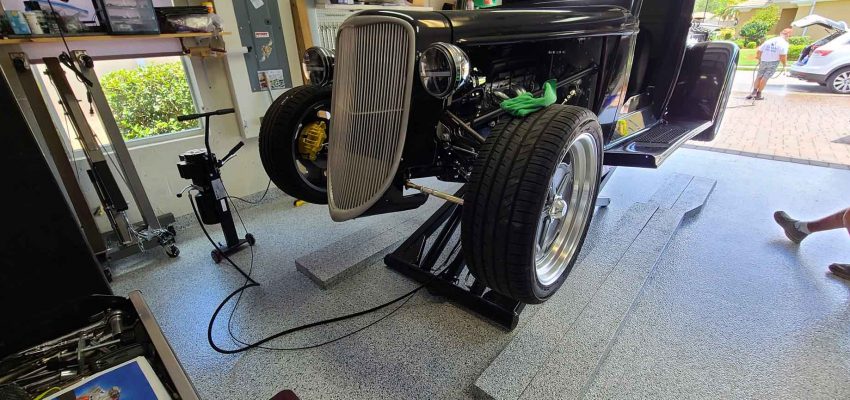
The photo at the top of this page shows a black hot rod raised on a lift over a gray flake floor, and that is the kind of room we picture when a Lodi installer calls about a garage. These floors take hot tires rolled in off summer pavement, jack stands, dropped wrenches and rolling creepers. The flake itself is tough. When a floor fails, the cause is usually underneath it.
Hot tire pickup, where the coating lets go of the slab and sticks to a tire, almost always traces back to weak prep or a system laid down too thin. A properly ground profile, a solid base with a full broadcast, and a durable clear topcoat give the floor its best chance. Put hard rubber pads under jack stands and lift posts as well, since those point loads press everything onto a very small spot.
If the room is a working shop instead of a weekend garage, tell us when you call and we will spec a heavier stack for it.
Tire marks wipe off. Lifted coating is a prep problem.
Scrape, vacuum, then vacuum again.
Let the base firm up
Scraping too early tears chips out of soft base and leaves bald patches. Step into a corner in spiked shoes and press a chip with your thumb. If it moves, give the base more time.
Scrape in two directions
Run the floor scraper one way across the room, then crosswise. The second pass catches chips standing on edge that the first pass rode right over.
Vacuum the field and the edges
Pull loose flake off the whole floor, then slow down along walls, door tracks and around drains. Whatever stays behind gets sealed in for good.
Kneel down and look across
Get low near the door and look across the floor toward the light. Stray dust and leftover chips jump out from that angle, while you can still pick them up before the clear coat goes down.
Counting flake by the square foot, plus overage.
Coverage per square foot comes down to the broadcast type, the chip size and the hand doing the throwing. Full broadcast uses far more flake than partial, and larger chips cover area differently than small ones. Give us the square footage and those choices, and we will work out a box count with you over the phone.
Then add overage. Some chips bounce off walls, some land outside the taped line, and a box from a newer batch may not match a floor that came up short. Before the first throw, blend every box together in one clean bin so any small variation spreads evenly across the room.
Tell us about the edges of the room as well. Stem walls, a step down into the house and a drain in the middle all change how much flake gets used, because vertical surfaces need a hand-placed broadcast and every edge catches extra chips. A garage with shelving that stays bolted along one wall needs a plan for reaching behind it before the base goes down.
The flake blends are on the shelf, and the complete build sits under decorative flake systems. Under the chips goes an epoxy system, over them a polyaspartic topcoat, and the floor starts with a concrete grinder rental. A customer who wants no chips at all may prefer metallic flooring. The floors we test on are written up at the field test bench.
Settle the color before the Tracy run.
Lodi is about 33 road miles from our bench, and plenty of installers settle the color before they drive. Pull up the blends with the customer standing in their own garage, where the real light and the real floor tell you more than a showroom ever will.
Call ahead and we stage boxes, base and topcoat together, or have the order brought out the same week. Regular buyers get contractor pricing. Browse the Lodi supply page, look over San Joaquin County, or reach the bench through the contact page.
Flake floor questions from Lodi.
Is full or partial broadcast better for a garage?
For most garages, full broadcast. It covers the base completely, hides slab blemishes and wears well once topcoated. Partial broadcast uses fewer boxes and lets the base color become part of the look, though uneven throwing shows. Match the choice to the floor the customer has in mind.
Which flake blend hides dirt best?
A mid-tone blend with a mix of light and dark chips hides dust and tire scuffs best. Very dark blends show dust, and very light ones show scuffs. Smaller chips blur dirt into a speckle. Judge the blend in the customer’s own garage lighting before choosing.
How much flake should I order for my square footage?
It depends on broadcast type, chip size and how heavy the throw is. Send the square footage with those choices and we will work out the box count with you, then add overage for bounce, spill and a possible batch difference. Blend every box together before you start.
When should I scrape the floor?
Once the base has firmed up enough that a chip will not move under your thumb. Scrape too soon and you tear chips out of soft base. Scrape in two directions, vacuum the field and every edge, then look across the floor from low near the door.
Will hot tires lift a flake floor?
Hot tire lift usually traces back to a thin coating or weak prep, rarely to the flake itself. A properly ground profile, a solid base with full broadcast and a durable clear topcoat give the floor its best chance. Put rubber pads under jack stands and lift posts to spread point loads.
Can I pick up a flake order at the Tracy bench?
Yes. Lodi is about 33 road miles away, so a pickup run is easy. Call ahead with the blend and the box count so your order is staged. Same-week local delivery is available too, and regular buyers can set up contractor pricing.
Send the square footage and the look.
Tell us the room, full or partial broadcast, and the floor the customer has in mind, and we will count boxes with you.
- (209) 208-4656
- chris@exclusiveresins.com
- Tracy, CA · Ships nationwide
Throwing flake in a Lodi garage soon?
Call the bench with the square footage, the chip size and your broadcast type, or send a message, and we will stage the order for your pickup.