

stack
One order, four coats deep.
Primer, build coat, broadcast and topcoat, written up together for Lodi garages, shops and commercial kitchens. We spec the stack from your slab, your mil target and your square footage, then stage it at the Tracy bench or run it out the same week. You or your crew lay the floor. Our job is making sure nothing is missing when you do.
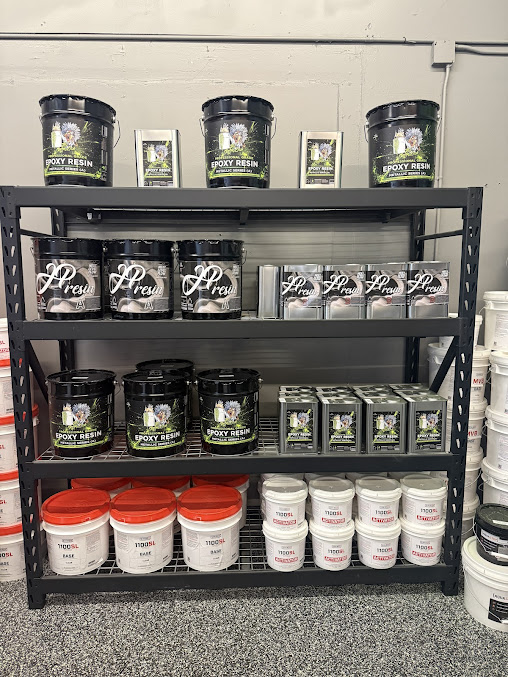
Write the stack down before anyone opens a kit.
An epoxy floor is four products that have to behave like one. The primer bites into freshly ground concrete. The build coat gives the floor its body and its color. A broadcast of flake or quartz goes in when the look or the grip calls for it, and a topcoat seals everything against whatever rolls across the room. Buy those from four different places and every compatibility question becomes yours to answer on the slab.
Our habit is simple. Before anything comes off the shelf for a Lodi job, the whole stack goes onto one sheet: which primer, which build coat and how thick, which broadcast and how many boxes, which topcoat and how many kits. Chris has poured these systems himself, so that sheet reflects what has held up on real concrete.
On pour day the same sheet becomes your checklist. If a line is written on it, the product is in the truck. If something on site looks off, you have a record of exactly what went down and in which order, which makes the phone call back to the bench a short one.
Four coats, written on one page.
solids
Why the shelf leans on 100% solids.
Water-based epoxy has its place. It rolls thin, cleans up with water, and forgives a first-timer coating a basement or a laundry room. What it gives up is thickness. A good share of what comes out of that bucket is water, and the water leaves as the coat dries, so the film left on the floor is far thinner than the wet coat you spread.
A 100% solids epoxy keeps close to everything you put down. Roll a heavy coat and a heavy coat cures. That is the reason the Tracy bench stocks solids for build coats: the thickness printed on the data sheet is the thickness you get, and a contractor can plan mils with real confidence. The tradeoff is shorter working time and a steeper learning curve, and we will be straight with you about both on the phone.
A garage and a wash-down kitchen get different orders.

The tan flake floor in this photo is a typical residential garage. Once it is in use, cars park on it and a hose runs across it on summer weekends. A standard primer, a pigmented build coat, a flake broadcast and a clear topcoat handle that kind of room well, and it is the system most Lodi homeowners ask their installer about.
A commercial kitchen is a different animal. Hot water, degreasers, floor drains and daily scrubbing all work on the coating at once, and a garage system sold into that room usually gives up at the drains first. Those jobs want a heavier build, a chemical-resistant topcoat and a texture that still grips when it is wet. Tell us how the room is cleaned, how hot the water runs and where every drain sits, and we will spec the order around that.
Coverage math that fits on a napkin.
Measure the real square footage
Length times width, then add step-downs, any stem walls you plan to coat, and the floor hiding under shelving that will be moved out. Crews lose more material to rooms measured from memory than to any mixing mistake.
Set a mil target for every coat
Primer goes on thin, the build coat heavier, the topcoat somewhere between. Write the target beside each coat on the order sheet so everybody on the crew rolls toward the same number.
Run the division
At 100% solids, a gallon spread one mil thick covers roughly 1,604 square feet. Divide that by your mil target to get coverage per gallon, then divide the floor area by the result. Porous, open concrete will drink more primer than this math predicts.
Round up to whole kits
Kits come in fixed sizes, so round up and carry a little extra. An unopened kit waits for next week. Coming up short leaves a visible line through the room.
Pour a practice slab at the academy first.
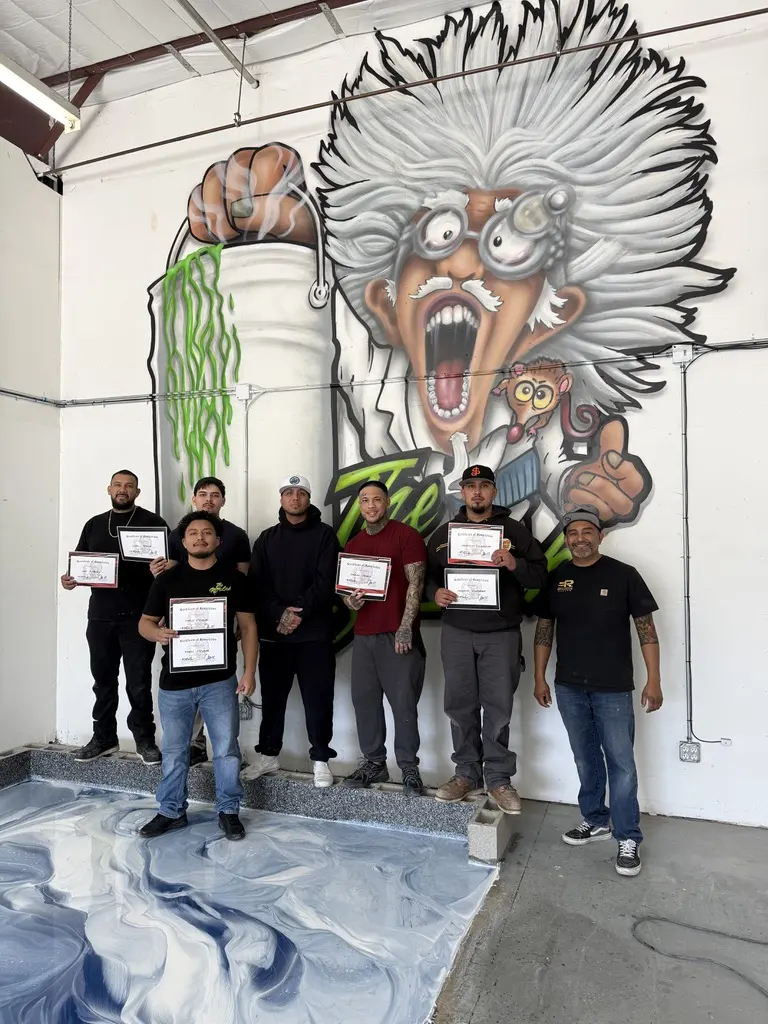
Everyone in the photo at the top of this page walked out of a class holding a certificate, standing beside the metallic test slab from the class. That is what the training academy is for. You make your mistakes on a board in Tracy with the owner beside you, and the customer’s garage in Lodi never sees them.
If a full epoxy system is new to you, a class is worth more than any product advice we can give over the phone. You feel how quickly a solids build coat thickens in the bucket, how a squeegee pulls material across the slab, and how much flake a wet base will really take. The first paid floor then becomes the second one you have done.
Most Lodi orders reach into the other lines too. A decorative flake broadcast often sits inside the stack, plenty of crews close out with a polyaspartic topcoat, a showroom may call for metallic flooring, and prep day starts with a concrete grinder rental. Every kit is listed under epoxy systems, and the floors we test on are written up at the field test bench.
Everything in the truck before you leave Tracy.
Lodi is about 33 road miles from our bench. That is close enough for same-week local delivery or pickup, and far enough that one forgotten item costs the crew an afternoon on the highway. So the pickup list covers more than resin: rollers and frames, spiked shoes, a mixing paddle, tape, patch material for the cracks the grinder opens, and a moisture test if nobody has checked the slab yet.
Call ahead and we stage the order by coat so loading goes quickly. Crews who buy often get contractor pricing on terms we set up together. The Lodi supply page shows the whole shelf for this market, San Joaquin County lists the nearby cities, and the contact page reaches the bench directly.
Asked at the bench about system floors.
Why do you sell primer, build coat and topcoat together?
Coats from one matched line are made to bond to each other, and we have run those stacks on real slabs before they reached the shelf. Buying them as one order also gives you a single sheet to check on pour day, with every kit counted against your square footage.
Should I use water-based or 100% solids epoxy?
For most Lodi garages and shops, 100% solids. It cures at close to the thickness you roll, so the mil target on the data sheet matches the finished floor. Water-based products suit light-duty rooms and first attempts, though the film ends up much thinner once the water leaves.
How do I work out how many kits a floor needs?
Measure the real square footage, set a mil target for each coat, and divide the floor area by the coverage per gallon. Round up to whole kits and carry a little extra, since porous concrete drinks primer. Send us your numbers and we will check the math with you.
What changes for a commercial kitchen floor?
Nearly everything above the primer. Hot water, degreasers and daily scrubbing call for a heavier build, a chemical-resistant topcoat and a texture that grips when wet. Tell us the cleaning routine, the water temperature and where the drains sit, and we will write the system around that room.
Do you install epoxy floors in Lodi?
No. We are a supply house and training academy, so you or your crew lay the floor. We spec the stack, stage the material and pick up the phone when something looks wrong. If a full system is new to you, take a class and pour a practice slab first.
How far is Lodi from the Tracy bench?
About 33 road miles, so most orders go out the same week and pickup is an easy drive. Call ahead and we will stage everything by coat. Regular buyers can set up contractor pricing based on typical volume.
Tell us the room and what crosses it.
Send the square footage, a photo of the slab and how the room gets used, and we will draft the stack with you.
- (209) 208-4656
- chris@exclusiveresins.com
- Tracy, CA · Ships nationwide
Writing up a system floor in Lodi?
Call the bench with the room size and your mil target, or send a message, and we will build the full order sheet with you before a single kit leaves Tracy.