

flake
Pick the blend on a board before it hits the slab.
Decorative flake for Stockton garages and shops. Chip size, full or partial broadcast, how many boxes the floor needs, and a sample board to settle the color before the job starts. Picked up at the Tracy bench or brought out the same week.
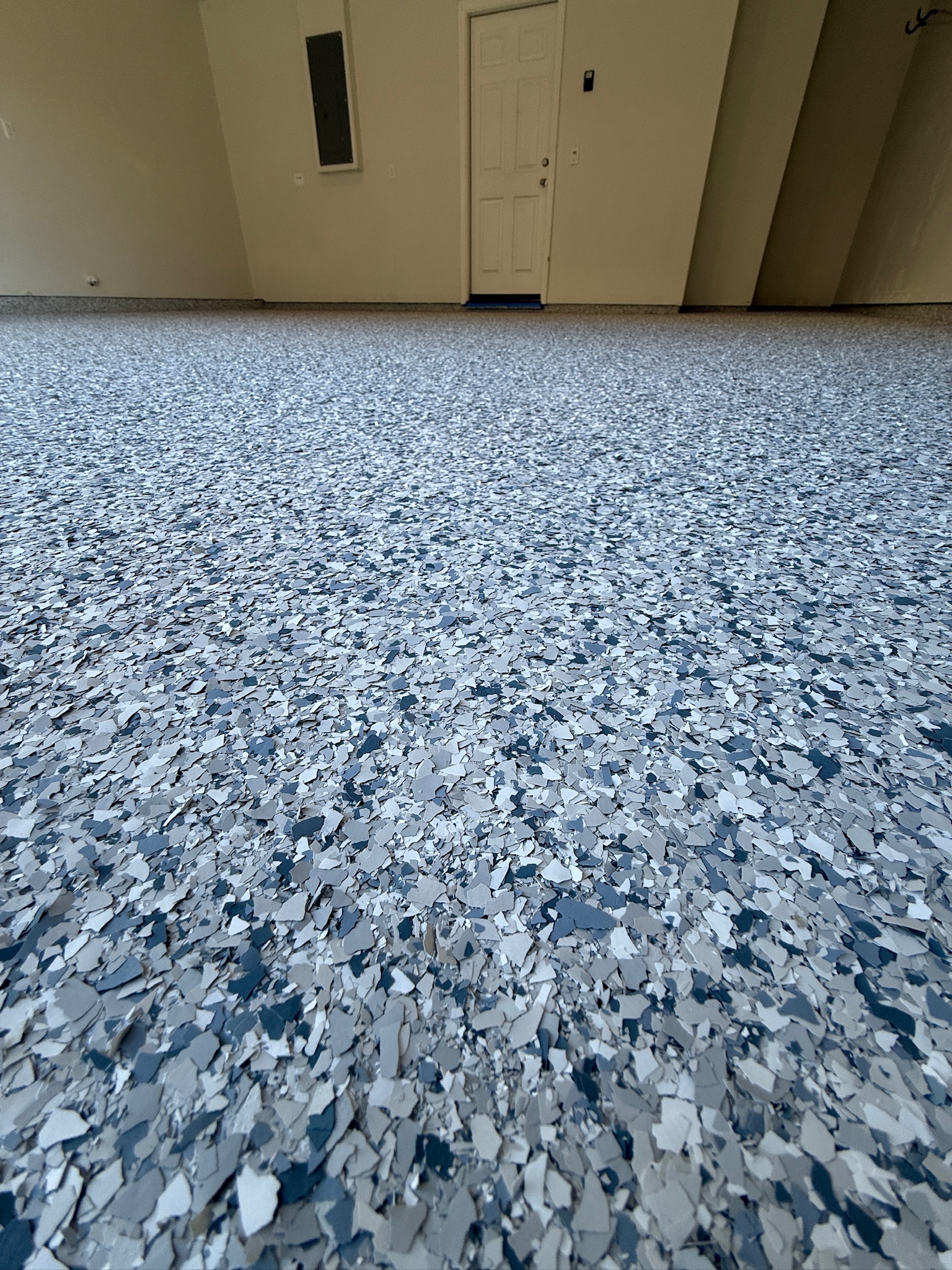
Full broadcast or partial is the first real decision.
Every flake floor starts with the same question, and the answer changes the look, the labor and the size of the order. A full broadcast throws chips into the wet base until it will not take any more, so the base color disappears entirely. A partial broadcast scatters chips across a visible base, and that base color becomes part of the design.
Full broadcast hides small flaws in the slab and leaves the most texture before scraping. It also takes far more flake and a proper scrape before the topcoat goes on. Partial broadcast uses fewer boxes and moves faster, though every uneven throw shows, and a patchy hand leaves thin spots the homeowner will notice from the doorway.
Neither one is better in general. Tell us what the customer wants the floor to look like, and whether they have seen that kind of floor in person, and we will help you steer toward the version that matches what they have in their head.
Decide the broadcast before you count a single box.
Chip size changes how the floor reads from the door.
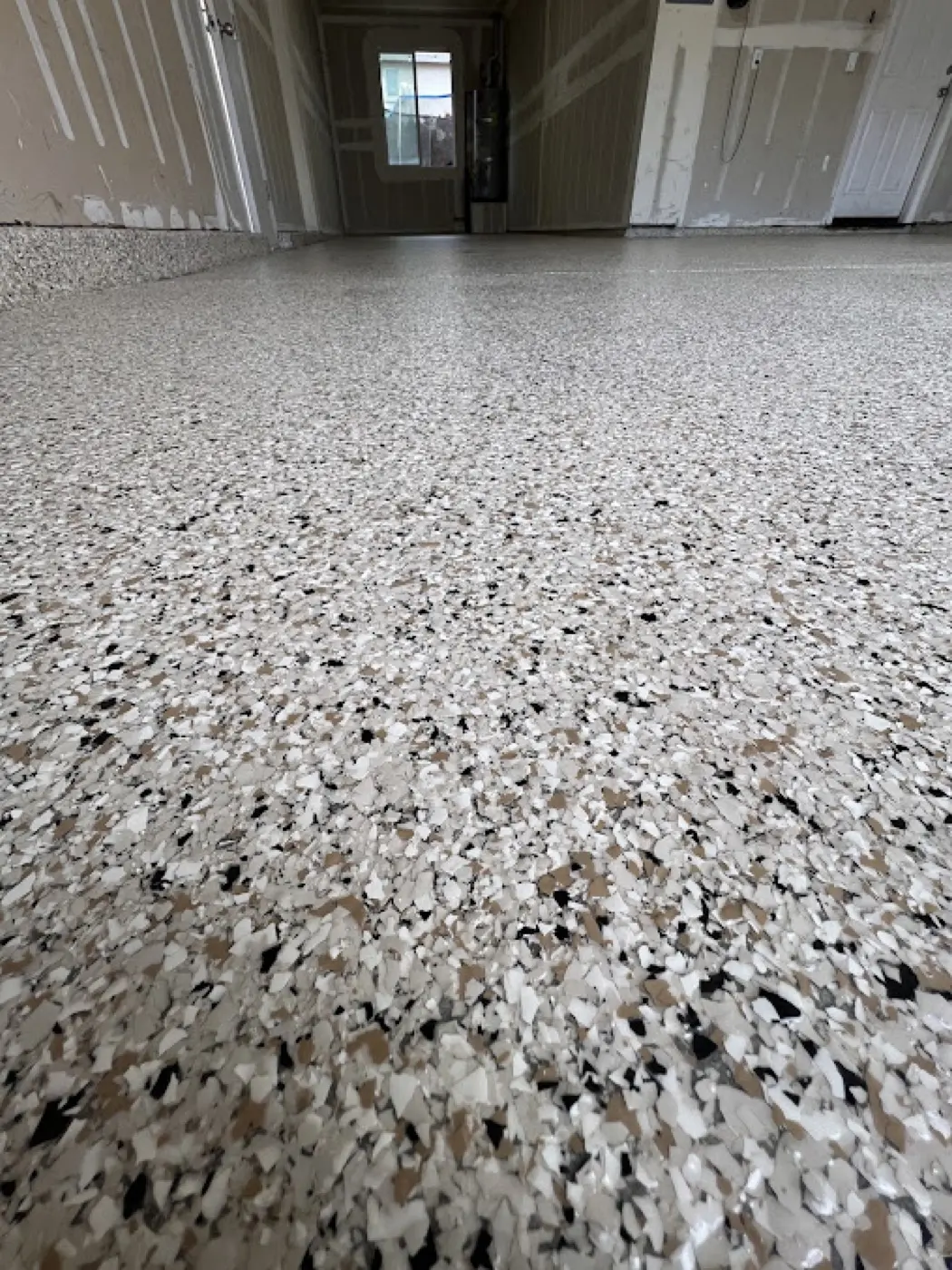
Small chips blend into an even speckle that reads as one tone from a few steps back. Large chips read as individual pieces, show the blend more boldly, and leave more texture to knock down during the scrape. Medium chips sit between the two, which is why so many garage floors end up there.
Size also changes how a blend behaves in a big room compared with a sample in your hand. A busy blend in large chips can crowd a small space. A quiet blend in small chips can wash out across a wide shop. Earth tones like the floor in this photo hide dust and tire marks well, which matters to a customer who parks in that garage every day.
method
From sample board to clear coat.
Make a sample board first
Coat a scrap board with the base color you plan to use, broadcast the blend at the same density you will use on the floor, and topcoat it. A loose handful of chips on a table tells you almost nothing about the finished floor. The board lets the customer approve the look before a single box gets opened on site.
Broadcast to refusal or to pattern
For full broadcast, throw up and let the chips fall evenly until the wet base stops taking them. For partial, walk a steady pattern and keep your throw consistent from wall to wall. Spiked shoes let you step into the wet base to reach the middle of the room.
Scrape once the base has cured
Run a floor scraper across the whole surface to knock off loose chips and the ones standing on edge. Skip it and those sharp edges end up sealed under the topcoat, where they catch socks, mops and the customer’s attention.
Vacuum like the finish depends on it
Every loose chip or bit of dust left behind gets locked into the clear coat for good. Vacuum the whole floor, then go over it again along the walls and door lines, where debris always collects.
Topcoat the textured floor
The topcoat goes over a rough surface and fills that texture, so it takes more product than a smooth floor would. Polyaspartic or urethane both work here, and we size the order to the chip size and broadcast you chose.
How many boxes a garage takes, plus the spare.
Flake coverage depends on the broadcast type and the chip size, and on how heavy the installer’s hand is. Full broadcast uses far more material per square foot than partial. Larger chips cover area differently than small ones. Give us the square footage and those two choices, and we will work out the count with you on the phone.
Then order one more box than the math says. Flake blends can shift slightly between production batches, and running short on a garage floor can mean finishing with a box that does not quite match. The spare rides in your truck and either saves the job or goes to the next one. It is a small habit that saves an awkward call with the customer.

On a bigger floor, open every box before the broadcast starts and blend them together in a clean bin. Mixing the boxes spreads any slight batch difference across the whole room, so no single section looks off when daylight comes through the garage door. Keep the flake dry and sealed until you use it, because chips that pick up moisture clump in the hand and land in piles instead of a clean spread. Walk the room before you mix the base and decide where you will start and where you will finish, so nobody gets trapped in a corner holding a half-empty bucket with nothing in reach. That same plan tells you where to set the spare box: close to the far wall, where running short would hurt the most.
The blends live on the decorative flake blend shelf, and the full system, base coats included, is on the decorative flake systems page. Lock the chips down with a polyaspartic topcoat, build the base from an epoxy system, and book a grinder rental for prep. If the customer wants a floor with no chips at all, look at metallic floors. Every line is in the catalog.
Stockton orders leave the bench the same week.
Stockton is about 22 road miles from Tracy and one of the San Joaquin County markets we supply with the same field-tested shelf. Boxes, base and topcoat can be staged together for pickup, so one stop covers the whole floor.
Browse the Stockton supply page, see the rest of San Joaquin County, or send your square footage through the contact page.
Flake questions before a Stockton pour.
Should I use full or partial broadcast?
Full broadcast hides slab flaws and covers the base completely, though it takes more flake and a thorough scrape. Partial broadcast shows the base color, uses fewer boxes and goes faster, but uneven throws show. Pick based on the look the customer wants and how much texture they will accept.
Which chip size should I choose?
Small chips read as an even speckle from a few steps back. Large chips show individual pieces and the blend more boldly, with more texture to scrape. Medium sits between the two. Make a sample board at the size you plan to use before the customer signs off on the floor.
How many boxes of flake does a garage need?
It depends on square footage, broadcast type and chip size. Full broadcast uses much more than partial. Send us those details and we will work out the count, then order one extra box so a batch difference never leaves you finishing the floor with a mismatched blend.
Why scrape a flake floor before the topcoat?
Scraping knocks off loose chips and the ones standing on edge. Left in place, those sharp edges get sealed under the clear coat and feel rough underfoot. Scrape the whole floor once the base has cured, vacuum it thoroughly, and only then apply the topcoat.
How should I show a customer a flake blend?
Build a sample board with the real base color, the chip size, the broadcast density and the topcoat you plan to use. A loose handful of chips looks nothing like the finished floor. Let the customer see the board in their own garage lighting before you order the full count.
Can I pick up flake in Tracy on the way to Stockton?
Yes. Stockton is about 22 road miles from the bench. Call ahead and we will stage the boxes, base and topcoat so the order is ready when you pull up. Same-week local delivery is also available, and regular orders qualify for contractor pricing.
Send the blend you are considering.
Send a photo of the floor you are trying to match, or the blend you have in mind, and we will talk chip size and box count.
- (209) 208-4656
- chris@exclusiveresins.com
- Tracy, CA · Ships nationwide
Flake floor on the calendar in Stockton?
Call the bench with the square footage, chip size and broadcast type, or send a message and we will count the boxes with you, spare included.