

polyaspartic
Topcoat the surfaces that face the sun.
UV-stable clears for a Lathrop covered porch, entry walk or garage apron, sold in kits small enough to finish before they turn. Picked up at the Tracy bench or delivered the same week.
outside
Where the house meets daylight.
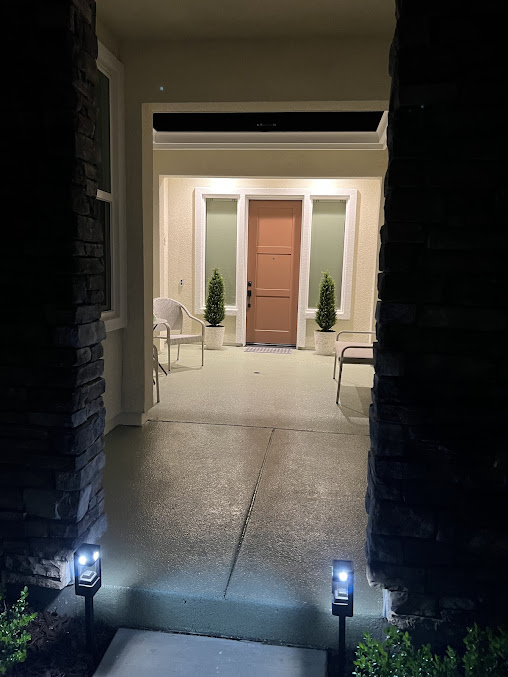
Most of what leaves our shelf ends up inside a garage or a shop. The jobs on this page sit at the edge of the house instead: a covered front porch, the walk leading up to it, and the apron where a garage floor runs out toward the driveway. None of them bake in full sun all day. All of them catch enough light to change which clear belongs on top.
A porch roof blocks the midday sun and does nothing about the low light that slides in under the eaves early and late. An entry walk might sit in shade for half the year and in the open for the other half. A garage apron gets direct light every time the door rolls up. Those are the surfaces where a clear that looked fine for a season starts drifting in color.
The front entry is also the one part of the house every visitor sees. A homeowner shrugs at a little wear in the back corner of a garage. A yellowed band across the porch at the front door gets noticed by every guest, and the installer gets the phone call.
The front door is the worst place for a clear to change color.
Why an epoxy clear turns amber outside.
Epoxy makes an excellent body coat and a poor outdoor finish. Most epoxies are aromatic, and ultraviolet light breaks down their surface over time. You see it first as yellowing, then as a chalky dullness. Under shop lights that process barely moves. At a threshold or on a porch it keeps going for as long as light keeps landing there.
Polyaspartic resins are aliphatic, the chemistry that holds its color in sunlight, and that is why they end up as the top layer on outdoor-facing work. The body coat and the chip underneath can still be epoxy. The clear on top is the part the sun actually reaches, so that is where the polyaspartic goes.
Look at any coated garage where the floor meets the drive and you can see why the line matters. The apron is where a sun-worn topcoat shows first, right at the spot where the coated floor stops and bare concrete begins.

Mix a batch you can finish before it turns.
Polyaspartic gives you a fast return to service and charges for it in working time. The pot life is short to begin with, and it shrinks further as the material and the concrete warm up.
Roll it at first light or after the sun drops.
In a Valley summer the hour you start matters as much as the product you bought. A slab that sat in afternoon sun holds its heat well into the evening, and warm concrete pushes a fast resin even faster. Rolling a polyaspartic onto a hot entry walk in the middle of the afternoon is how crews end up with lap marks, trapped bubbles and a batch that sets in the tray.
Start early, while the concrete is still cool from the night, or wait until the surface has given up its heat after sundown. Store the kits somewhere shaded, since a truck parked in the sun cooks them before they are opened. Check the slab temperature as well as the air, because the concrete is what the resin touches.
Outdoor work brings its own small problems. Early mornings can leave dew on a porch, and evening work lights pull in bugs. Wipe the surface dry before the first batch, and aim the lights away from the wet coat where you can.
Flake locked under a clear polyaspartic.
A flake-coated porch with a walkway running up to the front door is one of the most common versions of this job. On outdoor-facing work that build usually runs base coat, full chip broadcast, scrape, vacuum, and then a clear. The chip hides dust tracked in from the yard and gives the surface some texture. The clear keeps the chip colors from drifting once the sun gets to them.
Two things tighten up when that clear is a polyaspartic. The scrape and vacuum have to be completely finished before anyone mixes, because a fast coat leaves no time to stop and pick debris out of it. And the clear has to wet the entire textured surface in one pass, so the roller nap and the batch size need to suit the chip you broadcast.
Ask us about traction as well. An exterior walk that gets wet from sprinklers or rain calls for a different conversation than a garage floor does, and that conversation belongs before the order.
Indoor floors can keep their epoxy clear.
Plenty of jobs never need a polyaspartic at all. A windowless shop bay, a back storage room or a floor that never sees daylight will do fine under an epoxy topcoat, and the epoxy gives your crew a longer working window and a calmer day.
The dividing line is light, and after that the schedule. If sunlight reaches the floor, or the customer needs to walk on it quickly, polyaspartic earns its short pot life. If neither is true, a clear epoxy covers it. Tell us where the surface sits and which way it faces, and we will say plainly which clear fits.
More for the Lathrop order.
The clear is the last coat. These pages cover what goes under it and what opens the slab first.
Clear coat questions for outdoor jobs.
Why does epoxy yellow on a porch when polyaspartic holds its color?
Most epoxies are aromatic, and ultraviolet light breaks down their surface, which shows up as yellowing and then dulling. Polyaspartic resins are aliphatic, so they hold color in sunlight. On outdoor-facing surfaces the clear on top is the layer that needs that stability.
How big should each polyaspartic batch be?
Only as big as your crew can spread and roll before it thickens. Two people on a porch need smaller kits than a full crew in a shop. Tell us the job and the headcount and we will size the order in kits that match.
What time of day should I roll it in summer?
Early morning while the concrete is still cool, or evening after the surface has lost its heat. Check the slab temperature as well as the air, keep kits out of a hot truck bed, and dry off any morning dew before the first batch.
Can a clear polyaspartic go over flake on an entry walk?
Yes, that is a common outdoor build. Finish the scrape and vacuum completely before mixing, because a fast clear leaves no time to pick out debris. If the walk gets wet from sprinklers or rain, call us about traction before you order.
Is an epoxy topcoat still fine for an indoor room?
Often, yes. A room or shop bay that never sees daylight does well under an epoxy clear, and the longer working window makes the day easier on the crew. Choose polyaspartic when sunlight reaches the floor or the schedule is tight.
Do you apply polyaspartic in Lathrop, or only sell it?
We only sell it, along with the advice and training to use it well. Exclusive Resin Supply is a supply house and academy in Tracy, so you or your crew roll the coat. Lathrop is about 8 road miles away, which makes pickup easy.
Fresh kits the morning you roll.
Lathrop is one of the San Joaquin County markets we supply, and the drive from the Tracy bench is short enough to collect fresh kits the morning of the job instead of letting them sit in a hot garage for days. If the weather changes your plan, the same person is on the phone to change the order.
The Lathrop page lists every line on the truck, and San Joaquin County covers the towns around it.
Send the surface and the sun it gets.
Add the square footage and how many people will be on the roller. We will come back with a topcoat and a batch plan sized for your crew.
- (209) 208-4656
- chris@exclusiveresins.com
- Tracy, CA · Ships nationwide
Coating a porch or apron in Lathrop?
Call the bench with the surface, the exposure and when you plan to pour. We will size the kits into batches and have them staged in Tracy.