


metallic
Metallic epoxy that moves where you tell it.
Clear epoxy, metallic pigment and a UV-stable clear for a Lathrop living room, office or shop floor. It all leaves our Tracy bench, and the owner will talk through the movement with you before a single kit gets opened.
how the look happens
The swirl is mostly timing and a few cheap tools.
A metallic floor starts as a clear epoxy with pigment stirred into it. That pigment is a fine reflective powder, and while the resin is still fluid the particles float, settle and drift toward wherever the liquid is moving. Every vein, cell and pool on a finished floor is a record of where the resin traveled in the minutes after it hit the slab.
So the look gets built with ordinary things. A notched squeegee spreads each batch to an even film. A roller pushed in long loops lays down direction. A spray bottle of alcohol, misted lightly, breaks the surface and opens cells. A heat gun thins an area so the pigment flares out. Some installers drag a brush or a trowel edge through it when they want a harder line.
Timing decides which of those tools does anything. Right after the pour the resin answers every touch. As it starts to gel, that same stroke leaves a mark that will not level back out. Learn where that turn happens on the product you actually bought, and you stop fighting the floor and start steering it.
The pigment stays wherever the resin was moving when it stopped.
Batch the whole room before the first kit is opened.
One continuous pour means the room gets mixed, spread and worked with no gap anywhere. Settle these on paper at the bench, never on a wet slab.
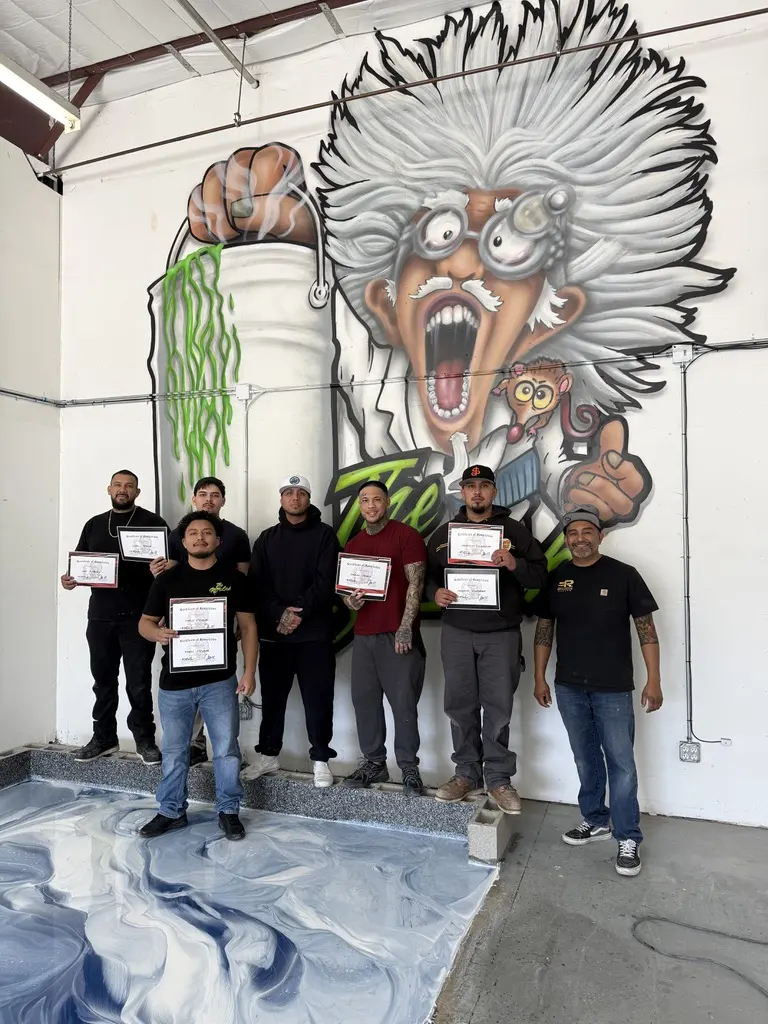
Why the owner wants crews to pour one at the academy first.
A metallic floor gets sold off a photo, and the photo is the easy part. The hard part is standing in a room with resin starting to go off and knowing whether that dull patch needs alcohol, heat, or nothing at all. Nobody learns that from a video. You learn it by doing it next to someone who already made those mistakes on his own floors.
That is why the owner teaches metallic hands on at the training academy in Tracy. Metallic classes pour a full metallic floor and work the pigment while it is still moving, so the first real pour a crew does for a Lathrop customer is not their first pour. He would rather a contractor burn a day on the academy floor than learn on somebody’s living room.
Already running metallic jobs? Call anyway when something changes. A new pigment, a darker base or a hot afternoon shifts how the resin behaves, and a short phone call costs a lot less than a regrind.
Where a metallic floor is the wrong thing to sell.
Metallic is a high-gloss finish, and gloss is honest about damage. A scuff that would vanish into a flake floor sits right on top of a metallic, lit up by every window in the room. Put that finish somewhere it gets abused and the floor that wowed the customer at handoff looks tired a season later.
There are a few places we steer buyers away from it. A working garage or shop where cars, floor jacks and dragged equipment cross it every day. Any room where grit tracks in off the yard, because sand under a boot acts like sandpaper on a gloss clear. And anything outdoors, where sun ambers epoxy and moisture from underneath lifts a coating that was never built for weather.
For those rooms we will point you to a flake system that hides wear, or a polyaspartic topcoat for anything facing the sun. A living space, an office, a salon or a lightly used shop is where metallic earns the extra planning. Before you put a number in front of a customer, run the room past the owner at (209) 208-4656.
The Lathrop order, from grind to clear.
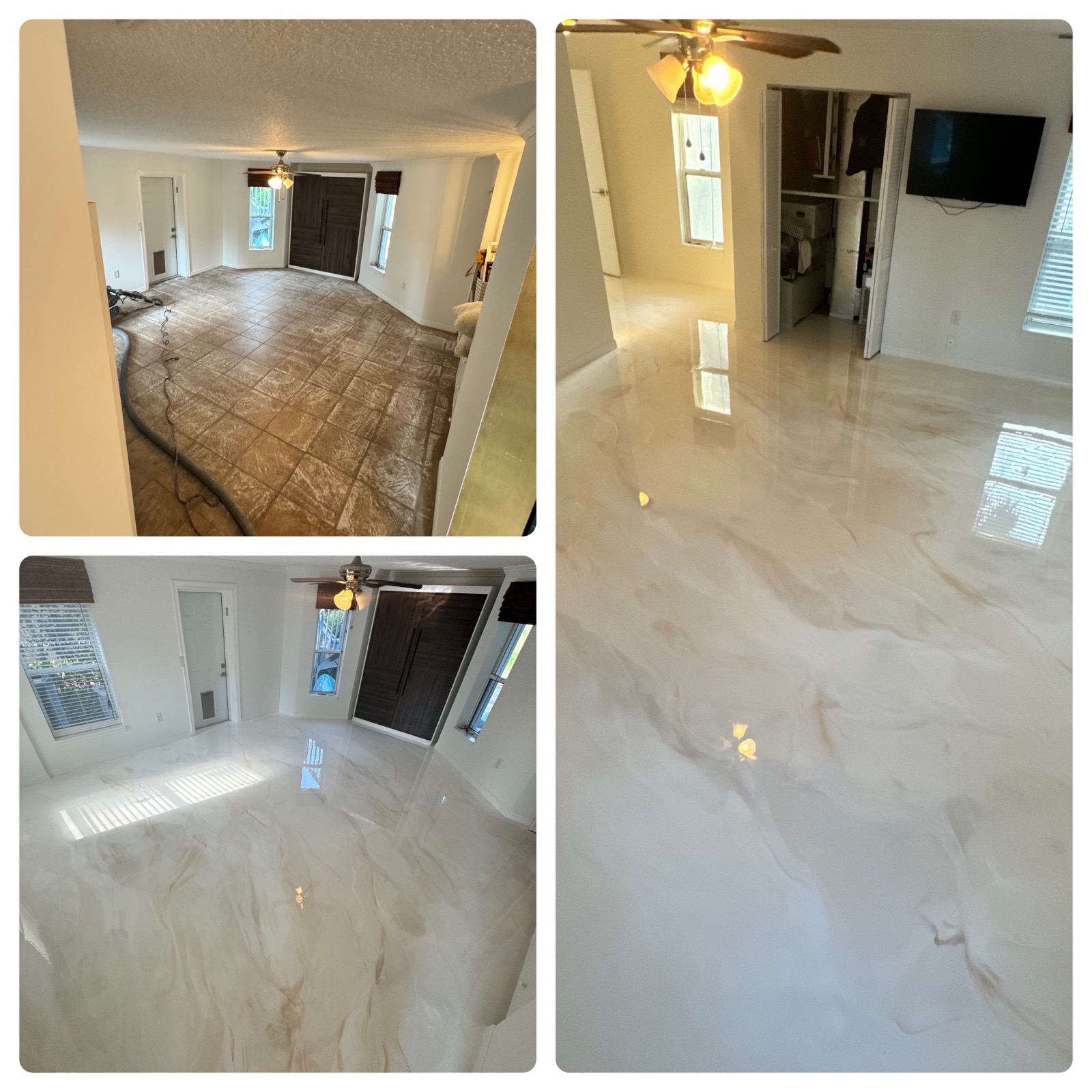
A metallic job leaves the bench as a system. The slab gets ground before anything else, and if you do not own a machine, the concrete grinder rental goes out of the same shop. After that comes a primer, a base coat in the color that will sit under the pigment, the pigmented clear, and a UV-stable topcoat over everything.
For the rest of the list, walk through pour day one person at a time. The mixer needs a drill with a paddle and a fresh bucket for every batch, since resin left clinging to a used bucket can kick the next one off early. The spreader needs notched squeegees and rollers. The finisher is the one crossing wet resin, so spiked shoes go on that line, along with the spray bottle. If the room needs a heavier build, or moisture came up when you tested, we fold epoxy systems into the same order so nothing waits on a second trip.
Browse the lines in the catalog, then send the square footage and base color through the contact page. Crews who run metallic often can set up contractor terms with us.
Collect it in Tracy or have it sent to Lathrop.
Lathrop is about 8 road miles from our Tracy bench, so pickup is an easy errand the day before a pour. Ride the kits home in the cab, never an open bed on a hot Valley afternoon. Resin that bakes in the sun comes out of the bucket with less working time than the label promises, and working time is the thing a metallic needs most. If nobody can make the drive, most orders can go out same week.
The site-wide metallic flooring systems page covers the whole line. For everything else we stock for this market, the Lathrop supply page is the place to look, and the county page lists the towns around it.
What Lathrop buyers ask about metallic.
Will my order be ready when I get to Tracy?
It will be if you call first. Give us the room size, the base color and the pigment you picked, and the resin, pigment and clear get staged together on the bench. If you would rather not make the drive, most orders can go out same week.
Do you pour metallic floors in Lathrop?
No. We are a supply shop and training academy, so we sell the material, help you plan the pour and teach the technique. You or your crew lay the floor. The owner has run these systems himself, which is where the advice comes from.
How many kits should I order for one room?
Enough to finish the room in one continuous pour, plus one spare. Coverage depends on the film thickness and the effect you want, so send the square footage and the look. We will work the count with you before anything gets packed.
Can a metallic floor go in a garage that holds a car?
It can, but it will show wear fast. Tires, jacks and grit scratch a gloss clear, and on a metallic there is no chip pattern to break those marks up. For a garage that gets driven into daily, a flake system is usually the better sell.
Do I have to take an academy class before selling metallic?
Nobody requires it, but the owner strongly recommends it. Pouring a full metallic floor in class, with someone reading the resin beside you, teaches the timing faster than any job will. Crews who train first make far fewer expensive mistakes on customer floors.
Will sunlight change the color of a metallic floor?
Epoxy on its own ambers under sunlight, and a room with big windows shows it first. A UV-stable topcoat over the pigmented coat protects the color. Never skip that clear on a floor that sees daylight, even if the room looks shaded.
A Tracy shop with Lathrop roots.
The bench sits in Tracy, but Lathrop is close to home for us. We belong to the Lathrop Chamber of Commerce and sponsor Lathrop Little League and the Junior Spartans. Orders reach crews well beyond the county these days, and every one of them still gets packed on the same bench.
Send the room size and the colors.
Ask about a pigment, a kit count, contractor terms, pickup timing or the next academy class. The person reading it has poured metallic floors.
- (209) 208-4656
- chris@exclusiveresins.com
- Tracy, CA · Ships nationwide
Metallic floor on the calendar in Lathrop?
Tell the owner the room, the light it gets and the square footage. He will size the batches and have the kit staged.