

Some of the most useful calls we get from Stockton crews start with an older commercial building. The owner wants a coated floor, the slab has carried forklifts and drums for decades, and nobody on site can say what was ever put down on it. That slab can usually take a good coating. It just has to be read first, and the reading happens before a single kit gets ordered.
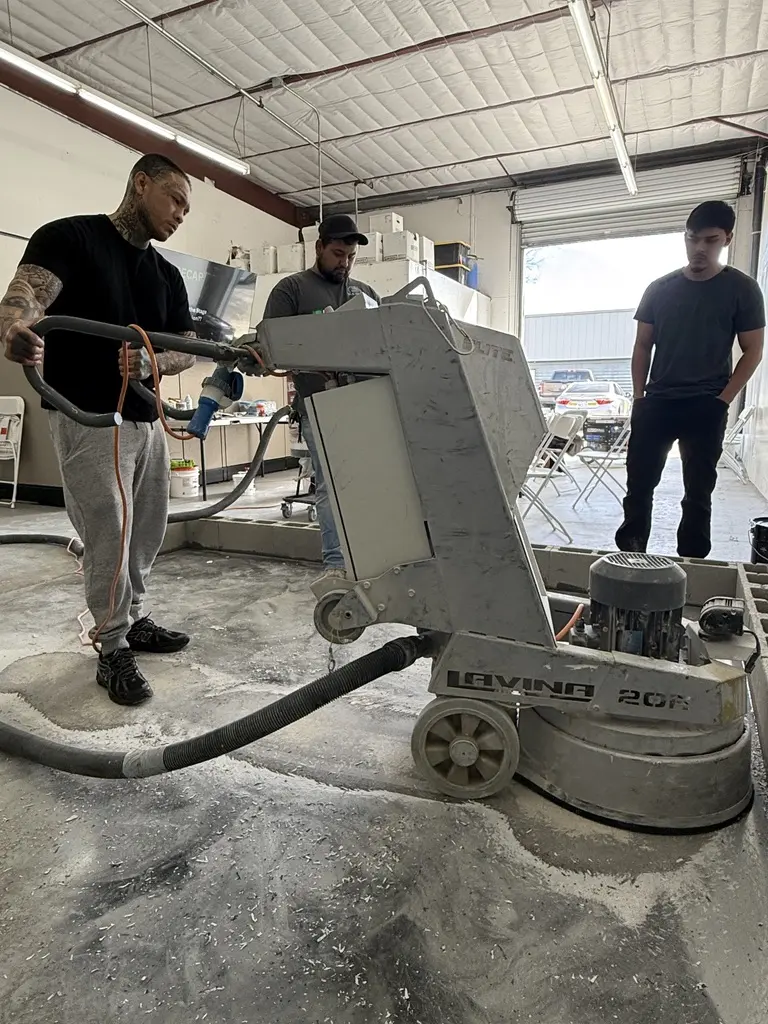
What decades of use leave in the concrete
Concrete is porous. Anything that sat on it long enough went into it, and a grinder only takes off the top of the problem.
Oil and hydraulic fluid are the usual suspects on a warehouse slab. They wick down into the paste, and a floor that looks clean after grinding can still bleed contamination back up once a warm resin sits on it. The telltale is a coating that fisheyes or pulls back into little craters in one area while the rest of the bay lays down flat.
Then there is the stuff nobody sees. Curing compound sprayed on the day the slab was poured, a sealer somebody rolled on in a previous life of the building, wax from an old cleaning contract, adhesive where carpet tile or VCT used to be. Each one is a bond breaker, and each one wants a different response.
Walk the whole floor before you talk products. Note the dark stains, the shiny patches, and the areas where water beads instead of darkening the concrete. That walk is the first half of your material list.
Degrease first, then find out whether it worked
A stained area gets degreased before it gets ground, and ground again after. Grinding an oily slab first smears the contamination around the pad and drives some of it into fresh open pores.
Scrub a concrete degreaser into the stain, let it dwell as long as the label says, and pull it up with a wet vac rather than rinsing it across the floor into clean concrete. A heavy stain can take two or three rounds, and sometimes it never comes out completely.
The water test tells you where you stand. Drop a little water on the cleaned, ground area. If it darkens the concrete and soaks in, the pores are open. If it beads or sits on top, something is still in there.
Where a stain will not give up, grind that section deeper, look at a primer the manufacturer rates for oil-contaminated concrete, or tell the building owner that spot carries risk. Pretending the stain is gone is how a crew ends up back on the job six months later grinding off a failed patch.
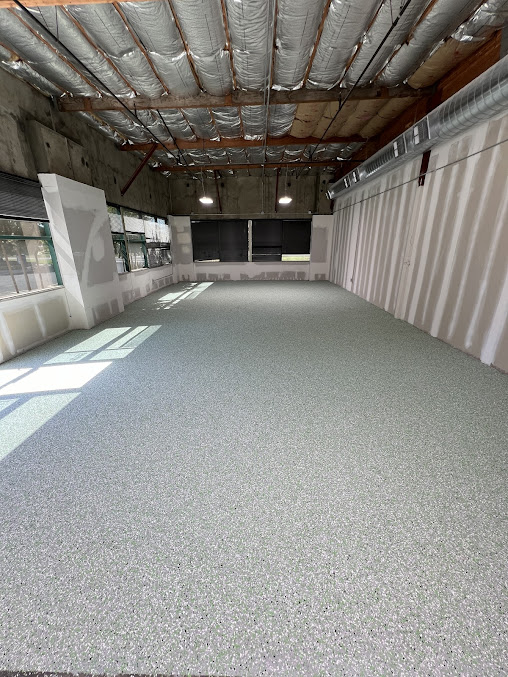
Curing compounds and old sealers that never announce themselves
A slab can look like raw concrete and still carry a film. Curing compounds were made to hold moisture in the slab, which means they were made to stop liquids passing through the surface. Your primer needs to do exactly that passing.
The water test catches most of it. So does the grind itself, if you watch the pad. A sealer tends to gum up diamonds and leave a smear instead of clean dust. If your segments are loading up faster than they should on an old floor, stop and look at the slab before you blame the tooling.
Old sealers, paint and thick coatings call for a more aggressive approach. Taking up a coating is a different grind from profiling bare concrete, with different segments, and the slab underneath is often softer or patched in places nobody mentioned. Crews who do not own the right machine can look at grinder rental for Stockton jobs for that stage.
Whatever comes off, check the finished surface against the profile your system calls for before you open a bucket. Old slabs grind unevenly, and a bay that took the diamonds well can sit right next to one that barely scratched.
Which cracks get filled and which ones get respected
An aged commercial slab has cracks. The useful question is which of them have finished moving.
Hairline shrinkage cracks that have sat stable for years can usually be routed open, cleaned and filled with a repair product rated for the system going over them. A crack with one side higher than the other, or one that has visibly grown, is telling you the slab still moves, and a rigid coating over it will crack right along the same line.
Control joints are the other decision. They exist so the slab can move, and bridging them with a hard fill looks great on day one and less great after a season. Many crews carry the joint through the coating. Some owners want a continuous look anyway, and that is a conversation to have in writing before the pour.
Count the linear feet of repair while you walk the floor. Crack filler and joint material are the items that get left off the order, and at 22 miles each way they are an expensive reason for a midweek drive back to the bench.
What to ask the building owner before anything ships
The person who owns or manages the building knows things the concrete will not tell you, and most of them never think to mention it.
Ask what the space was used for, and for how long. A former parts warehouse and a former food facility are different slabs. Ask whether anything was ever coated, sealed or glued down, and whether any paperwork survives from when the slab was poured. Ask about water: roof leaks, a wash area, a door that lets rain in, a corner that stays damp. That last answer sends you to a moisture test before you order anything.
Ask what the floor has to do next. Forklift traffic, chemical spills, a showroom and a shop full of jack stands all point to different systems, and the epoxy systems we ship to Stockton get specced around that answer.
Then bring the notes to us. The age of the slab, the stains, the test patch results and the future use are enough for Chris to walk the stack through with you on one phone call.
Old slab questions crews bring to the bench
How do I know if oil has soaked in too deep to coat over?
Clean and grind the stain, then do a water drop test and a small test patch of your primer. If the water darkens the concrete and the patch cures flat and bonded after a day, you are usually in good shape. If the patch fisheyes, lifts or stays soft over the stain, the contamination is still there and needs more work first.
Is a test patch worth the time on a tight schedule?
Yes. A test patch uses a small kit and a day of waiting, and it answers the adhesion question before the whole floor depends on it. Put one on the worst stain and one on clean concrete, let both cure, and try to pry them up. If the two behave differently, you have learned something the data sheet could not tell you.
Can you help spec a system before the slab has been ground?
We can start. Send the square footage, the age of the building, photos of the stains and what the floor will be used for, and we will talk through a likely stack. The final call usually waits for the grind and the test patch, because an old slab often shows its real condition only once the top comes off.
An old slab rewards patience more than any product on the shelf: degrease, grind, test a patch, then order. When the patch shows you something you did not expect, call the bench at (209) 208-4656 with photos of what lifted, or send the stain photos and the square footage before a single kit ships.