

A first garage job has a way of exposing every gap in the order. The grinder is running, the base is mixed, and somebody realizes the spiked shoes are still sitting at home. From Lodi, the Tracy bench is 33 road miles away, and a run there and back in the middle of the job eats the working time a fresh batch does not have. The fix is dull and it works. Build the order as one list, from the first grind to the last strip of tape, and check it twice before anything goes in the truck.

Start the list at the slab, before the resin
Prep gear is the part of a first order that gets forgotten, because it does not come in a pail with a label on it. It decides whether the base coat bonds, so it goes on the list first.
Plan the grinder and its tooling for the profile the system calls for, a dust extractor sized to that grinder, and a spare set of diamonds in case the slab turns out harder than it looked. Add a hand grinder for the edges and corners a planetary machine cannot reach. Bring a moisture test kit and run it before the order is final, since a wet slab changes which primer you need.
For crack and joint repair, list the filler, a crack chaser wheel and a putty knife, then a shop vacuum and a stack of clean rags. If you are renting the machine, the grinder rental can be staged with the rest of the order, so the machine and the diamonds come home with the resin on one drive.
Primer, base and topcoat as one matched system
A garage flake floor is a stack, and every layer has to agree with the one under it and the one over it. A base from one line under a topcoat from another can work. It can also leave you with a cure problem nobody can explain over the phone. Order the layers as a set.
Ask for the primer or moisture barrier the slab test called for, then the pigmented base, then the clear topcoat. Confirm the base color against the flake blend before it ships, because a dark base under a light blend reads differently than the sample chip in your hand. Write the batch numbers down when the pails arrive.
The decorative flake systems come matched from base to topcoat, which keeps the data sheets consistent and the recoat times in one place. If the job is a plain floor with no broadcast, the epoxy systems page covers that stack. Either way, keep every sheet in the truck, folded open to the recoat line.
How much flake to put on the pallet
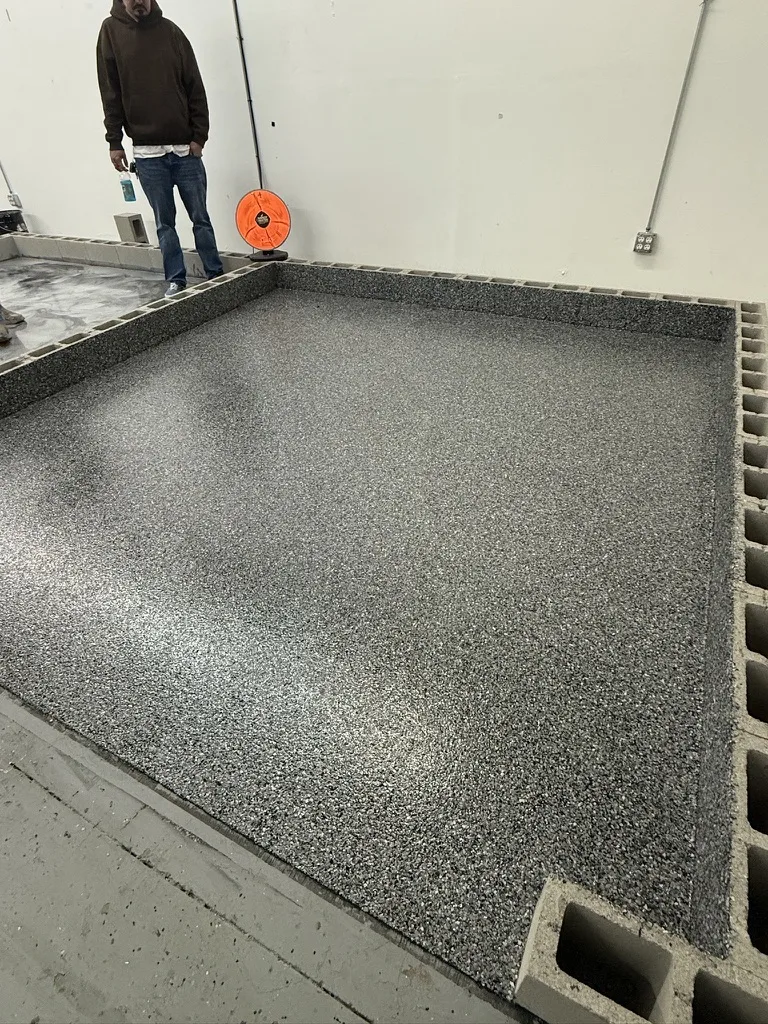
Flake runs out faster than a first timer expects. A full broadcast means throwing chips until the wet base will not take any more, and a good share of what you throw gets scraped and vacuumed off afterward. That excess is part of the job, and it has to be on the order.
Give the bench the square footage measured wall to wall, plus the door apron and any steps. Say whether you plan a full broadcast or a partial one, since partial uses far less. Then add overage on top. Running short while the base is still wet is the one mistake on this list that cannot wait for a drive.
Order the blend from a single run where you can, so the boxes match. Set aside one sealed box, marked with the job address, for repairs down the road. Bring a stiff push broom, a floor scraper and heavy bags for the swept chips, because the scrape and vacuum before the topcoat is where a sloppy flake field turns into a clean one.
Rollers, squeegees, spikes and the small stuff
Most second trips are for something cheaper than lunch. Small tools get treated as an afterthought, and a first job is where that catches up with a crew.
For every coat, plan fresh roller covers in the nap the data sheet names, frames with extension poles, and a squeegee sized for the room. Covers do not survive between coats, so count one set per coat plus a spare. Add spiked shoes for everyone who will walk the wet floor, and check the straps before you leave.
Then the mixing gear: a drill with a jiffy mixer, clean buckets, and a scale or marked containers if you ever split kits. Painter’s tape and plastic sheeting for the walls and the door track. Nitrile gloves in bulk, safety glasses, and a respirator suited to the product. Chip brushes for cutting in along the edges. A work light and a trash bag. Lay it all out on the driveway the night before and tick it off.
Coverage overage and the last check before loading
Coverage on a data sheet is a clean number for a clean slab. A real garage has a thirsty, freshly ground surface, a floor sloped toward the door, and a few low spots that drink more material than any chart. Order above the calculated quantity, and more on a first job, when your spread rate is still a guess.
Unopened pails left over beat an empty bucket with a third of the floor still bare. Ask the bench how extra product should be stored so it keeps for the next job.
Before you load, walk the list in the order the day will run: grind, repair, vacuum, prime, base, broadcast, scrape, topcoat. At each step, point to the tool and the material in the truck. If you cannot point to it, it is not there. Staging the order for pickup at the Tracy bench helps here, since the whole system can be checked against the paper in one place while you are still standing next to it.
What Lodi installers ask before a first order
How much extra material should go on a first garage order?
Enough that running short is never part of the plan. Give the bench the measured square footage, the broadcast type and the condition of the slab, and the quantities get worked out with you. A freshly ground slab and a first timer’s spread rate both use more than the chart shows, so order above the calculated number and keep unopened pails for the next job.
Can I pick up the grinder and the material on the same trip?
Yes. Call ahead with the list and the dates, and the order gets staged at the Tracy bench with the machine and tooling beside it. From Lodi that is one 33 mile drive each way. Checking the whole order in one spot before loading makes it far less likely that something small stays behind. Bring straps for the machine.
What gets forgotten most on a first flake job?
Spiked shoes, spare roller covers and enough flake. The shoes and covers are cheap and easy to overlook, and the flake runs out because a full broadcast throws far more than ends up on the finished floor. Tape and plastic for the door track come next. Lay the kit out the night before and check it against the order.
A first garage floor goes better when every tool is already in the garage before the first pail is opened. Send the square footage and the system you plan to run through the contact page, or talk to the owner at (209) 208-4656 and build the list together.